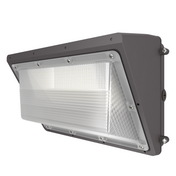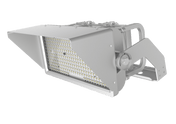

Walk through any commercial parking lot, college campus, or municipal park after dark. What do you see overhead? Chances are, you see LED area lights—sleek, rectangular fixtures mounted on poles ranging from 12 to 50 feet high .
These fixtures have quietly replaced nearly every other outdoor lighting technology over the past decade. Mercury vapor is gone. High-pressure sodium is fading. Metal halide is a memory .
But selecting the right LED area light is not as simple as picking a wattage and hoping for the best. You need to consider pole height, spacing, light distribution patterns, glare control, dark sky compliance, and energy codes .
This guide covers everything you need to know about LED area lights for commercial and outdoor applications in 2026—from core specifications to total cost of ownership analysis.
1. What Is an LED Area Light? (2026 Definition)
An LED area light (also called a site light, parking lot light, or shoebox light) is a luminaire designed to illuminate large outdoor spaces from elevated poles .
Typical commercial applications :
-
Commercial parking lots (retail, office, hotel, hospital)
-
Corporate and university campuses
-
Municipal parks and recreational areas
-
Gas station canopies and forecourts
-
Car dealership lots
-
Loading docks and industrial yards
-
Walkways, bike paths, and pedestrian plazas
What distinguishes an area light from other outdoor fixtures :
| Feature | Area Light | Floodlight | Wall Pack | Street Light |
|---|---|---|---|---|
| Mounting height | 12–50 ft | 10–100+ ft | 8–20 ft | 20–40 ft |
| Beam pattern | Wide, even distribution | Narrow to wide (adjustable) | Forward-throwing | Long, narrow |
| Typical use | Parking lots, campuses | Sports fields, facades | Building perimeters | Roadways |
| Pole mounting | Top or side | Top or side | Wall only | Top only |
2. Key Metrics for LED Area Light Selection
Before selecting a fixture, understand the five metrics that define outdoor lighting quality .
Metric 1: Lumens (Not Watts)
Watts measure energy input. Lumens measure light output. Always compare lumens .
| Old Technology | Typical Lumens | LED Equivalent Wattage |
|---|---|---|
| 175W Mercury Vapor | 7,000–8,000 lm | 40W–60W LED |
| 250W Metal Halide | 11,000–14,000 lm | 80W–100W LED |
| 400W Metal Halide | 20,000–24,000 lm | 120W–150W LED |
| 1000W Metal Halide | 55,000–65,000 lm | 300W–400W LED |
Rule of thumb for 2026: Target 130–150 lumens per watt (lm/W). Premium area lights achieve 150–180 lm/W . A 100W LED area light with 150 lm/W efficacy produces 15,000 lumens—equivalent to a 300W metal halide fixture .
Metric 2: Light Distribution Patterns (IESNA Types)
Choosing the wrong distribution pattern is the #1 cause of dark spots and wasted energy .
| Type | Shape | Best For | Typical Spacing |
|---|---|---|---|
| Type I | Long, narrow (2× wide as long) | Roadways, paths, sidewalks | 2–3× mounting height |
| Type II | Moderate width (3× long as wide) | Parking lot perimeters, bike paths | 2.5–3.5× mounting height |
| Type III | Wide (4× long as wide) | Most parking lots | 3–4× mounting height |
| Type IV | Very wide, forward-throwing | Pole at edge of lot (no backlight) | 1.5–1.75× mounting height |
| Type V | Round, symmetric | Center of open area, roundabouts | 2.5× mounting height (diameter) |
2026 innovation: Many modern LED area lights feature field-selectable distribution, allowing Type II, III, IV, or V selection during installation .
Metric 3: Pole Height & Spacing
Pole height determines spacing. A simple formula for initial estimation :
Maximum spacing = 4 × pole height (for Type III distribution)
-
Example: 25-foot poles → maximum 100-foot spacing between poles
Common pole heights by application :
-
Small parking lot (<20 cars): 12–15 ft
-
Retail parking lot: 20–30 ft
-
Large regional shopping center: 25–35 ft
-
College campus walkways: 15–20 ft
-
Industrial truck yard: 30–50 ft
Metric 4: Uniformity Ratios
Uniformity measures how evenly light is distributed across the paved surface .
| Area Type | Avg/Min (U1) | Max/Min (U2) |
|---|---|---|
| High-activity (retail, office) | 4:1 | 10:1 |
| Medium-activity (apartments, hotels) | 6:1 | 15:1 |
| Low-activity (industrial after-hours) | 10:1 | 20:1 |
LED advantage: Modern area lights achieve uniformity of 3:1 to 5:1—far better than legacy systems .
Metric 5: Correlated Color Temperature (CCT)
2026 regulatory note: Under DLC V6.0, outdoor products (excluding sports lighting) are capped at 5000K CCT to mitigate light pollution .
3. Why LED Area Lights Are the 2026 Standard
The Performance Gap: LED vs. Legacy Technologies
| Metric | Metal Halide (400W) | High-Pressure Sodium (250W) | LED Area Light (100W–150W) |
|---|---|---|---|
| System watts | 458W | 290W | 100W–150W |
| Efficacy (lm/W) | 60–80 lm/W | 70–90 lm/W | 130–180+ lm/W |
| Lifespan (L70) | 10,000–15,000 hrs | 15,000–24,000 hrs | 70,000–100,000+ hrs |
| CRI | 65–75 | 20–25 | 70–90+ |
| Instant on/off | No (10–15 min warm-up) | No (3–5 min warm-up) | Yes (microseconds) |
| Dimming | Poor (color shift) | Limited | Yes (0–100%) |
| Maintenance | Lamps every 2–3 years | Lamps every 3–5 years | None for 15–20 years |
The bottom line: LED area lights deliver better light quality, dramatically lower energy consumption, and virtually zero maintenance compared to legacy HID fixtures . The U.S. Department of Energy confirms that LED systems consistently deliver 50–70% energy reductions compared to traditional HID lighting .
4. Mounting Types for LED Area Lights
Area lights mount to poles in several ways. Choose based on pole type and retrofit needs .
Installation tip: Verify your pole tenon size before ordering. Most slip fitters fit 2⅜" or 3" OD; adapters are available for other sizes .
5. DLC V6.0 Certification — Critical for 2026 Projects
DLC (DesignLights Consortium) certification is your gateway to utility rebates that can cover 15–50% of upfront project costs. Over 700 North American energy efficiency programs use the DLC Qualified Products List (QPL) to determine rebate eligibility .
Key 2026 Deadlines
| Milestone | Date |
|---|---|
| V6.0 applications open | January 5, 2026 |
| Non-compliant products delisted | October 1, 2026 |
| V5.1 final delisting | December 15, 2026 |
What's New in DLC V6.0
Critical warning: A fixture certified under V5.1 at specification may be delisted and ineligible for rebates by the time you order. Verify DLC listing evidence at both submittal and purchase .
6. Durability: IP, IK, and Surge Protection
Outdoor fixtures must withstand rain, dust, temperature extremes, and physical impact .
IP Rating (Ingress Protection)
2026 recommendation: IP65 minimum; IP66 recommended for coastal or high-moisture locations .
IK Rating (Impact Protection)
| IK Rating | Impact Energy | Application |
|---|---|---|
| IK08 | 5 Joules | Standard commercial parking |
| IK10 | 20 Joules | High-risk areas (vandalism, forklift traffic) |
Surge protection: Without surge protection, one lightning strike can destroy your entire parking lot lighting system. Look for 10kV surge protection minimum .
7. Smart Controls: The Force Multiplier
Modern LED area lights are controls-ready, enabling significant additional energy savings beyond the base 50–70% reduction .
Recommendation for 2026: Choose fixtures with built-in photocell + 0–10V dimming as a minimum. Add motion sensors for low-traffic areas or security-focused applications .
8. Total Cost of Ownership (TCO) — 10-Year Comparison
Assumptions: 20 area lights, 12 hours/night (4,380 hours/year), $0.12/kWh .
| Cost Component | 250W Metal Halide | 100W LED Area Light (DLC) |
|---|---|---|
| Initial fixtures (20) | $800 ($40 ea) | $2,400 ($120 ea) |
| Utility rebate (LED only) | $0 | –$1,000 ($50/fixture) |
| Net upfront cost | $800 | $1,400 |
| Energy (10 years) – 20 fixtures | $29,440 | $10,520 |
| Maintenance (10 years) – 20 fixtures | $8,000+ | $0 |
| Total 10‑year cost | $38,240 | $11,920 |
10‑year savings with LED: $26,320 .
ROI on additional upfront investment: Over 1,500% .
9. Frequently Asked Questions
Q: What is the most important specification for LED area lights?
A: Lumens and efficacy—not wattage. Look for ≥130 lm/W and compare lumens to ensure adequate brightness .
Q: What is the best color temperature for parking lots?
A: 4000K is the most popular all-purpose choice for commercial applications. 5000K is recommended for security and CCTV applications .
Q: How long do LED area lights last?
A: Quality commercial fixtures have 50,000–100,000+ hour L70 ratings. At 4,000 annual operating hours, this equals 12.5–25 years of service .
Q: How far apart should parking lot lights be spaced?
A: For Type III distribution, spacing is typically 3–4 × mounting height. Spacing should never exceed 4× mounting height for uniform coverage .
Q: What is the minimum IP rating for outdoor commercial lights?
A: IP65 is the minimum for commercial outdoor use. IP66 is recommended for coastal or high-moisture locations .
Q: Are utility rebates still available for LED area lights in 2026?
A: Yes, but requirements have tightened with DLC V6.0. Verify DLC listing before purchasing—fixtures certified under V5.1 may be delisted by October 2026 .
Q: Do LED area lights work in cold weather?
A: Yes—better than HID. Look for fixtures rated from -40°C to +65°C for year-round reliability .
Final Verdict
Choosing LED area lights for commercial outdoor lighting requires a systematic approach:
The bottom line: The best LED area light for your commercial property is the one that matches your site geometry, delivers uniform illumination, and provides long-term value through energy savings and maintenance elimination. Modern LED systems pay for themselves in 12–24 months and continue saving for decades .