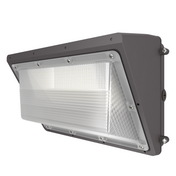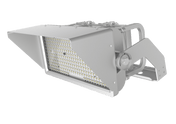

For decades, metal halide (MH) was the default choice for outdoor area lighting. Parking lots, campuses, and commercial sites relied on these high-intensity discharge (HID) fixtures to provide illumination after dark .
Then LEDs arrived.
Today, facility managers face a choice: stick with familiar metal halide technology or make the switch to LED area lights. This head-to-head comparison examines every relevant metric—energy efficiency, light quality, lifespan, maintenance, cold weather performance, and total cost of ownership—to answer the definitive question: Which is actually better?
Spoiler: For most applications in 2026, the winner is clear .
1. Energy Efficiency: The Biggest Difference
Energy consumption is where LED area lights deliver their most dramatic advantage . The U.S. Department of Energy (DOE) confirms that replacing metal halide with LED area lights can reduce energy use by 40–70% .
| Metric | 250W Metal Halide | 100W LED Area Light | Savings |
|---|---|---|---|
| System watts (incl. ballast) | 280W | 100W | 64% less |
| Annual energy (4,000 hrs @ $0.12/kWh) | $134 | $48 | $86 per fixture |
| 10-year energy (50 fixtures) | $67,200 | $24,000 | $43,200 saved |
A 50-fixture parking lot saves **over $4,300 annually** on electricity alone just by switching to LED—and over 10 years, that exceeds $43,000 in energy savings .
Why Metal Halide Is So Inefficient
Metal halide lamps convert only 40% of their energy into light. The other 60% is wasted as heat . LEDs convert approximately 90% of energy into light, making them far more efficient .
Additionally, metal halide lamps suffer from rapid lumen depreciation. By the time an MH lamp reaches 50% of its rated life (5,000–10,000 hours), it may produce only 50–65% of its initial lumens—yet it continues drawing full power . Your parking lot becomes progressively darker while your electricity bill stays the same.
2. Light Quality: CRI and Visibility
Light quality affects security camera footage, driver safety, and property aesthetics .
| Technology | Typical CRI | What You See |
|---|---|---|
| Metal Halide | 65–75 | Colors appear slightly green-tinted |
| LED Area Light | 70–90+ | Colors appear natural and vibrant |
The Security Camera Impact
A suspect wearing a red jacket under metal halide lighting may appear brown or gray. Under LED (CRI 80+), the jacket appears red—a crucial difference for identification .
Color Temperature Options
Metal halide has a fixed CCT (typically 4000K) that drifts over time toward green or pink. LED offers selectable CCT from 3000K to 6500K .
Winner: LED—Superior CRI and flexible CCT options make LED the clear choice for light quality .
3. Lifespan and Maintenance
HID lamps degrade rapidly and fail completely. LED fixtures fade slowly over many years .
| Technology | L70 Lifespan | Replacement Frequency (4,000 hrs/year) |
|---|---|---|
| Metal Halide | 10,000–15,000 hours | 2.5–3.5 years |
| LED Area Light | 50,000–100,000+ hours | 12.5–25+ years |
Lumen Depreciation
| Technology | Lumens at 40% of Rated Life | Lumens at 100% of Rated Life |
|---|---|---|
| Metal Halide | 50% of initial | 30–40% of initial (failure) |
| LED | 90–95% of initial | 70% of initial (still functioning) |
Maintenance Cost Comparison (50 Fixtures, 10 Years)
| Cost Category | Metal Halide | LED |
|---|---|---|
| Lamp replacements (5 cycles) | $6,250 | $0 |
| Labor (bucket truck, crew) | $4,000 | $0 |
| Ballast replacements | $1,500 | $0 |
| Total maintenance | $11,750+ | $0 |
Real-World Case Study: Bellingham Airport
The airport replaced 100 outdated metal halide fixtures with SYLVANIA LED Area Lights:
-
56% reduction in energy consumption (100,000 kWh annual savings)
-
$6,000–$8,000 annual maintenance cost reduction
-
150,000-hour product lifespan eliminates frequent relamping
Winner: LED—Unquestionably. No competition .
4. Instant On/Off and Restrike
This is one of the most critical operational differences .
| Scenario | Metal Halide | LED |
|---|---|---|
| Initial warm-up | 5–10 minutes | <0.5 seconds |
| Restrike after power interruption | 10–15 minutes | Instant |
Real-world impact: If a circuit breaker trips or a storm causes a power flicker during a metal halide-lit parking lot, the lights go dark for 10–20 minutes. With LED, the lot remains illuminated .
Winner: LED—The restrike delay alone is a deal-breaker for many security-sensitive applications .
5. Cold Weather Performance
For facilities in northern climates, cold weather performance is critical .
| Temperature | Metal Halide | LED |
|---|---|---|
| 0°C (32°F) | Normal operation, longer warm-up | Instant full output |
| -10°C (14°F) | Longer warm-up (15–20 min), reduced output | Instant full output |
| -20°C (-4°F) | May fail to strike | Instant full output (if cold-rated) |
| -30°C (-22°F) | Unlikely to start | Instant full output (cold-rated fixtures) |
Winner: LED—Dramatically better cold weather performance .
6. Dimming and Smart Controls
Modern LED area lights are controls-ready with integrated 0–10V dimming as a standard feature. Metal halide cannot compete .
| Feature | LED | Metal Halide |
|---|---|---|
| 0–10V dimming | ✓ Standard | ✗ (rare, inefficient) |
| Motion sensor integration | ✓ | ✗ (warm-up delay) |
| Schedule-based dimming | ✓ | ✗ |
| Remote monitoring | ✓ | ✗ |
Real savings from controls: With a schedule (100% until 10 PM, 50% after), you save an additional 30% beyond LED-vs-HID savings . A 100W LED running with bi-level dimming can achieve total savings of 70–85% compared to metal halide .
Winner: LED—HID cannot compete in the smart controls arena .
7. Environmental and Regulatory Compliance
2026 regulatory pressure: Major manufacturers (Philips, GE, Sylvania) have significantly reduced HID lamp and ballast production. Replacement parts are becoming harder to find and more expensive .
Winner: LED—No hazardous materials, lower carbon footprint, dark sky friendly .
8. Total Cost of Ownership (TCO): 10-Year Comparison
Upfront cost tells only part of the story. TCO reveals the full financial picture .
50-Fixture Parking Lot: 10-Year TCO
Assumptions: 50 fixtures, 4,000 hours/year, $0.12/kWh .
| Cost Category | 250W Metal Halide | 100W LED Area Light | Savings |
|---|---|---|---|
| Initial fixtures | $4,000 | $7,500 | ($3,500) |
| Utility rebate | $0 | –$3,000 | +$3,000 |
| Net upfront | $4,000 | $4,500 | ($500) |
| Energy (10 years) | $73,500 | $26,500 | $47,000 |
| Maintenance (10 years) | $22,750 | $0 | $22,750 |
| Disposal (hazardous) | $500 | $0 | $500 |
| Total 10-year TCO | $100,750 | $31,000 | $69,750 saved |
Payback Period
| Scenario | LED Premium | Annual Savings | Simple Payback |
|---|---|---|---|
| Retrofit (50 fixtures) | $500 (net) | $7,000–$10,000 | 1–2 years |
| With controls | $500 (net) | $9,000–$12,000 | 6–12 months |
Bellingham Airport achieved a 1.1-year payback with utility rebates . A Walmart Supercenter LED parking lot demonstration achieved a 6.1-year payback compared to 1000W metal halide (with electricity at $0.056/kWh—well below the national average). At national rates, payback would be 4–5 years .
9. Head-to-Head Summary Table
Score: Metal halide wins 1 category (upfront cost—narrowly). LED wins the other 12 categories .
Frequently Asked Questions
Q: Can I retrofit my existing metal halide poles with LED area lights?
A: Yes. Remove the old metal halide fixture and ballast, then mount the new LED fixture. Ensure the pole is structurally sound .
Q: How much energy can I save switching to LED area lights?
A: 50–70% compared to metal halide. With smart controls, savings can reach 70–85% .
Q: What is the typical payback period for a metal halide-to-LED retrofit?
A: 1–3 years for most commercial projects. With utility rebates and smart controls, payback can be under 12 months .
Q: What is the best color temperature for parking lots?
A: 4000K is the most popular all-purpose choice in 2026. 5000K is recommended for security and CCTV applications .
Q: Do LED area lights work in cold weather?
A: Yes. LEDs perform better in cold than heat. Look for fixtures rated to -40°C (-40°F) .
Q: Are DLC-listed fixtures required for utility rebates?
A: Yes. DLC certification is the primary gateway to utility rebates. The transition to DLC V6.0 in 2026 means you must verify listing at purchase .
Q: Why is 2026 a critical year to switch?
A: HID components are being phased out. Utility rebates are declining. Energy codes are tightening. Waiting means higher costs, fewer rebates, and potential non-compliance .
Final Verdict
After examining every relevant metric, the answer is clear:
LED area lights are unequivocally better than metal halide for virtually every commercial outdoor application in 2026 .
The only advantage metal halide retains is slightly lower upfront fixture cost—a gap that has narrowed dramatically and is often erased entirely by utility rebates .
The bottom line: If you are designing a new parking lot or retrofitting an existing one, there is no compelling reason to specify metal halide in 2026. LED area lights deliver better performance, lower operating costs, faster payback, and a superior experience for everyone who uses your facility .